
Mini dental implants for dentures are narrow-diameter titanium implants used to improve denture stability, retention, and chewing function. Unlike conventional Dental Implants, mini implants typically measure between 1.8–3.3 mm diameter and can often be placed using a minimally invasive dental implant technique.
For many denture wearers, they provide a practical denture adhesive alternative by creating a secure connection between the denture and the jawbone through specialized attachment systems. Learn more about how this mechanism works in our Mini Dental Implants Complete Clinical Guide (2026).
Many patients researching what are mini implants for dentures are looking for a solution to loose dentures, difficulty chewing, or reduced confidence while speaking. In suitable cases, mini implants can help stabilize removable dentures while requiring less available bone than conventional implant systems.
If you are researching what are mini implants for dentures to fix loose teeth, poor chewing, or low confidence, Check My Mini-Implant Candidacy for a consultation. For suitable candidates, mini implants quickly stabilize removable dentures using minimal bone.
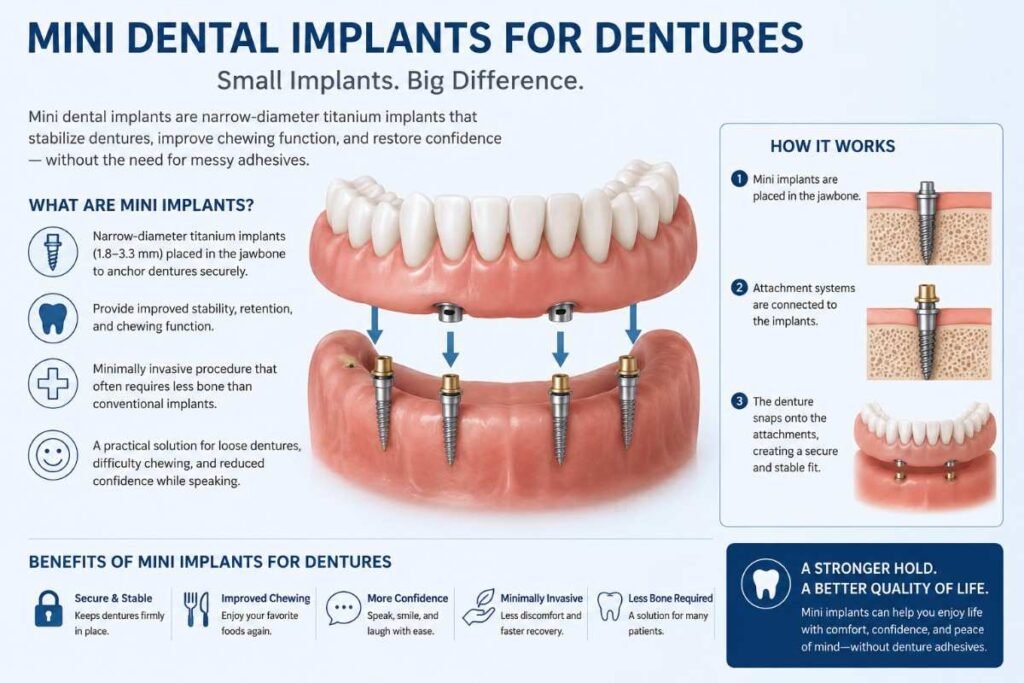
Table of Contents
ToggleWhat Are Mini Dental Implants for Dentures?
A Mini Dental Implant (MDI) is a narrow-diameter implant made from Titanium that is designed to support removable dentures and implant-retained dentures.
Unlike traditional implant systems, mini implants are smaller and may be suitable for patients with reduced Bone Density or moderate bone loss. Their primary purpose is denture stabilization, helping prevent unwanted denture movement during eating, speaking, and daily activities.
Many clinicians use mini implants to support mini implant supported dentures, particularly when patients are looking for improved retention without extensive preparatory procedures.
How Mini Dental Implants Stabilize Dentures
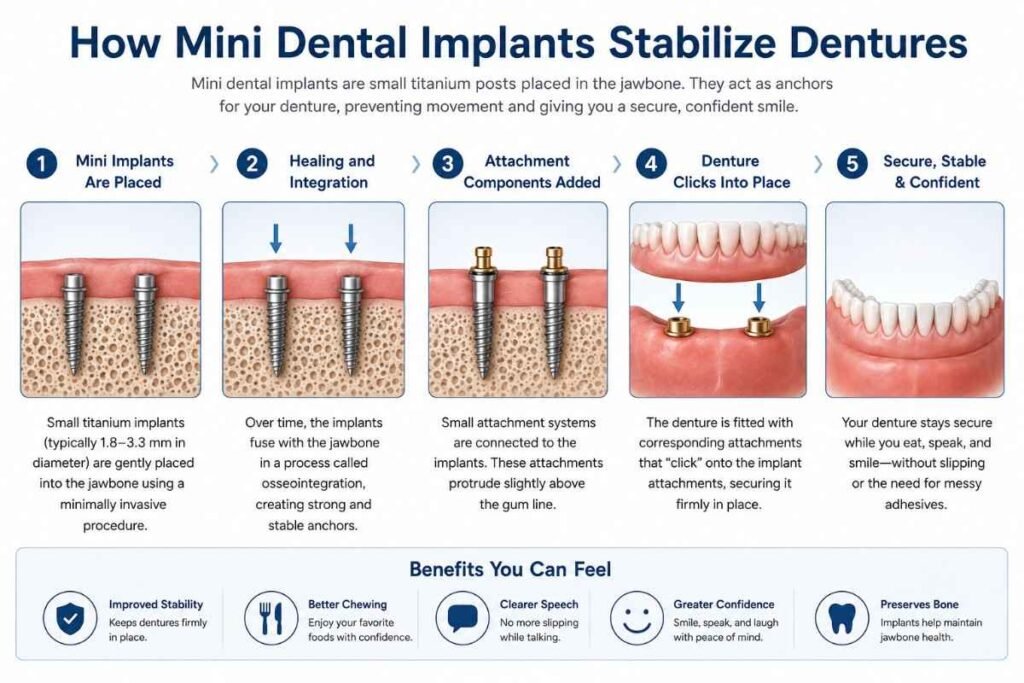
Mini implants work through a Ball-and-socket (O-ring) attachment mechanism.
The implant contains a small rounded head that extends above the gum tissue. Inside the denture, a corresponding attachment snaps onto the implant and creates a secure connection.
This system creates what clinicians refer to as overdentures or implant-retained dentures. Patients interested in the full clinical details of mini implant supported dentures, including attachment systems, maintenance requirements, and long-term care, can review our dedicated guide. For a comprehensive breakdown of this treatment protocol, clinicians and patients can reference our detailed mini implant supported dentures 2026 clinical guide.
Following placement, the surrounding bone gradually integrates with the implant through osseointegration, helping provide long-term support and retention.
Patients often notice improvements in:
- Denture retention
- Chewing efficiency
- Speech clarity
- Comfort
- Confidence
Can Mini Dental Implants for Upper Dentures Be Used?
Yes. Mini dental implants for upper dentures can be an effective option for selected patients.
However, the upper jaw generally contains softer bone than the lower jaw. Because of this, upper denture stabilization often requires more implants than lower denture stabilization.
| Arch | Typical Implant Count |
|---|---|
| Lower Arch | 4–6 implants |
| Upper Arch | 6–10 implants |
The exact number depends on bone availability, denture design, and individual anatomy.
The exact number depends on bone availability, denture design, and individual anatomy. If you want to find out exactly how many implants your specific anatomy requires, you can chat with us on WhatsApp to share your details with our clinical team.
How Many Mini Implants Do You Need for Full Dentures?
Patients frequently ask how many mini implants needed for dentures.
While treatment planning is individualized, most clinicians commonly recommend:
Mini Dental Implants Lower Dentures
Four to six implants are often sufficient to stabilize lower dentures because the lower jaw generally provides denser bone support.
Mini Dental Implants for Upper Dentures
Upper dentures commonly require six to ten implants due to anatomical differences and chewing forces.
A CBCT scan is usually necessary before determining the final treatment plan.
Are Mini Implants the Same as Snap-In Dentures?
No.
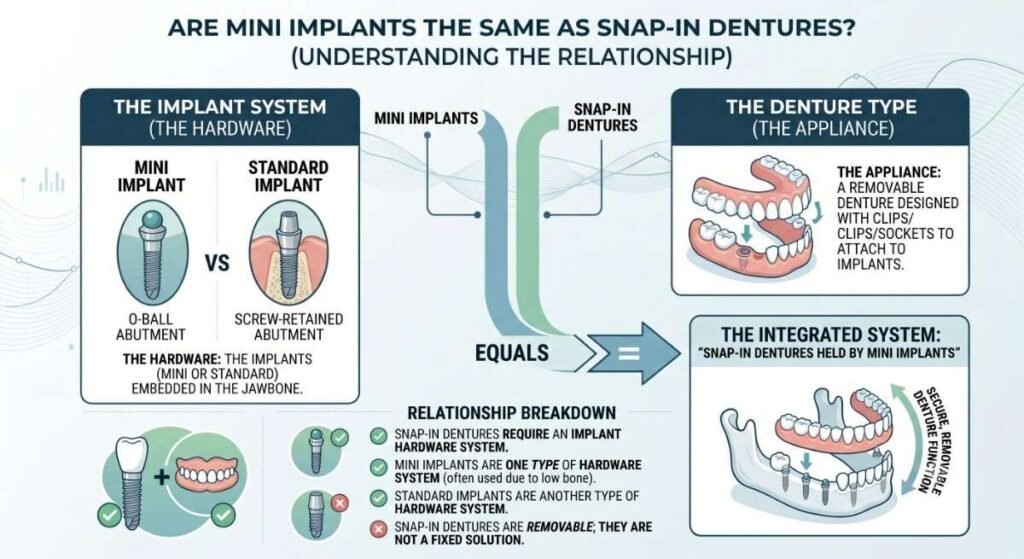
Many patients researching are mini implants the same as snap-in dentures assume the terms describe the same thing.
In reality:
- Mini implant = the implant anchor
- Snap-in denture = the denture attachment system
A snap-in denture may be supported by mini implants, but the two terms are not interchangeable.
Can Existing Dentures Be Retrofitted for Mini Implants?
One of the highest-converting questions online is: can existing dentures be retrofitted for mini implants?
In many cases, the answer is yes.
Existing dentures may sometimes be modified to work with implant attachment systems instead of being completely replaced. This can reduce treatment complexity and lower overall costs.
However, severely worn, fractured, or poorly fitting dentures may still require replacement.
Why Lower Dentures Often Become Loose Faster Than Upper Dentures
Many patients seek mini dental implants for dentures because their lower denture becomes unstable long before their upper denture.
This happens because the two arches rely on different retention mechanisms.
Upper dentures often benefit from a natural suction effect created between the denture base and the roof of the mouth. When the denture fits properly, this suction can provide a reasonable level of stability.
Lower dentures do not have the same advantage.
The tongue, cheeks, lips, and floor-of-mouth muscles constantly apply forces to the lower denture during speaking, chewing, and swallowing. At the same time, natural bone remodeling gradually reduces the height and width of the lower jaw after tooth loss.
As bone volume decreases, the denture may begin to move, rock, or lift during daily activities.
Common complaints include:
- Difficulty chewing certain foods
- Denture movement while speaking
- Gum irritation and pressure points
- Increased reliance on denture adhesive
- Reduced confidence in social situations
This is one reason mini dental implants lower dentures are among the most common applications of mini implant treatment.
By anchoring the denture directly to the jawbone, mini implants can reduce unwanted movement and provide a more secure connection than soft-tissue support alone.
For many patients, stabilizing a lower denture requires only four to six strategically positioned implants, making it one of the most predictable uses of mini implant supported dentures.
Mini Dental Implants for Dentures Without Bone Grafting
One reason patients investigate mini dental implants for dentures without bone grafting is because mini implants require less available bone than larger implant systems. Before moving forward with surgery, a detailed screening must confirm your jaw tissue and metabolic health align with these unique parameters; you can evaluate your system suitability in our master resource on who is a candidate for mini dental implants eligibility criteria 2026.
For some patients, this may reduce the likelihood of needing:
- Bone grafting
- Ridge augmentation
- Additional surgical procedures
However, treatment recommendations always depend on individual anatomy and radiographic findings.
What to Expect During Treatment
The treatment process typically includes:
- Consultation
- Imaging
- Treatment planning
- Implant placement
- Denture attachment
- Follow-up care
Some patients may qualify for a mini dental implants same day procedure, allowing denture stabilization on the day of implant placement.
Cost of Mini Dental Implants for Dentures
The cost of mini dental implants for dentures depends on:
- Number of implants
- Upper or lower arch treatment
- Existing denture condition
- Geographic location
- Diagnostic requirements
For a complete pricing breakdown, patients should review the dedicated mini dental implant cost in 2026 average prices what affects cost guide rather than relying solely on this overview page.

What Are Mini Dental Implants for Dentures?
A mini implant is often designed as a one-piece titanium implant post, meaning the implant body and the attachment head are connected in a single structure. This design is one reason mini implants may be considered for removable implant denture support in selected cases.
Mini Dental Implants for Dentures Without Bone Grafting
Because mini implants are narrower than many conventional implants, they may be considered in cases where jawbone density implants planning shows limited bone width. However, bone density, bite force, and the condition of the alveolar bone must still be evaluated before treatment.
Frequently Asked Questions
What Are Mini Implants for Dentures?
A mini denture implant is a small-diameter titanium screw (typically 1.8mm to 3mm wide) used to anchor a removable overdenture. Unlike standard two-piece implants, these are single-piece fixtures featuring a ball-shaped top that protrudes above the gumline. Known clinically as mini implant supported dentures, this system allows a modified or new denture base to snap directly onto the ball heads, eliminating slippage and the need for messy adhesives.
Can mini dental implants be used for upper dentures?
Yes, mini dental implants for upper dentures can be used, but they require a higher volume of implants (typically 6 to 10 posts) compared to the lower jaw (which requires 4 to 6) due to the naturally softer bone of the upper arch
Are mini implants the same as snap-in dentures?
No, are mini implants the same as snap-in dentures is a common misconception; they are actually two components of the same treatment system. Mini implants are the physical titanium posts surgically anchored into the jawbone, whereas snap-in dentures are the custom prosthetic teeth that clip onto those posts.
When looking at the overall financial investment, the cost of mini dental implants for dentures is generally lower than standard implant overdentures because the placement process is less invasive, requires fewer steps, and usually avoids the need for extensive bone grafting.
How Long Do Mini Dental Implants for Dentures Last?
Mini dental implants may function successfully for many years when properly maintained and placed in suitable clinical conditions. Long-term outcomes depend on factors such as oral hygiene, bone quality, bite forces, and overall health. Readers interested in detailed survival statistics and clinical research should review our dedicated success rate and longevity guides.
Can You Get Dental Implants If You Have Full Dentures?
Yes, you can get dental implants if you already have full dentures. In fact, many patients who wear traditional full dentures choose implant treatment because their dentures have become loose, uncomfortable, or less stable over time.