By: Kristal Clinic Editorial Team
Medically Reviewed By: Dr. Yusuf Sabir (Medipol University Faculty of Dentistry)
Last Updated: June 2026 | Clinical Status: Peer-Reviewed & Verified
Quick Answer Snippet: Mini dental implants (MDIs) are highly effective, narrow-diameter implants (1.8mm to 2.9mm) primarily used to stabilize lower dentures or replace small teeth in narrow spaces. While they offer a minimally invasive, single-visit placement and cost 40% to 60% less than traditional implants, they are not a universal replacement for standard implants due to lower structural load capacity.
For many patients researching mini dental implants worth it 2026, the answer comes down to balancing mini dental implant benefits, long-term functionality, and whether the treatment represents a genuinely affordable tooth replacement solution for their specific clinical situation. If you want to know if you are a candidate, you can chat directly with our specialists on WhatsApp for personalized guidance.

The "Worth It" Question Starts with the Right Clinical Problem
When evaluating if mini dental implants are worth the investment, the decision rests on a balance between immediate financial savings and long-term clinical durability.
Mini Implants vs. Traditional Implants: Key Differences
| Feature | Mini Dental Implants (MDIs) | Traditional Dental Implants |
| Diameter Size | 1.8mm – 2.9mm | 3.25mm – 6.0mm |
| Surgical Procedure | Minimally invasive, no stitches, single visit | Multi-step surgery, incisions, bone grafting often required |
| Healing Timeline | Immediate loading (often usable same day) | 3 to 6 months of osseointegration |
| Average Cost | $500 – $1,500 per implant | $2,000 – $5,000 per implant |
| Primary Use Case | Denture stabilization, narrow jawbones, small incisors | Full-arch restoration, single molars, heavy bite forces |
[INTENT SEGREGATION GATE - HIGH-CONVERSION CTA]
📊 CANDIDACY & COST CHECKER
Not sure if your jawbone density supports a mini implant vs. a traditional one?
Don't rely on guesswork. Get a personalized clinical review.
👉 [Button: Click to Speak with Our Surgical Specialists]
The Honest Limitations: When Mini Implants May Not Be the Right Choice
Genuinely helpful clinical guidance requires honesty about limitations. Mini dental implants, by virtue of their narrower diameter, carry less surface area in contact with the jawbone than full-size implants. This means they are not suitable for every situation.
They are generally not recommended for replacing large posterior teeth — particularly molars — where bite forces are highest. Subjecting a narrow implant to sustained heavy chewing load can increase the risk of fracture or loosening over time. Additionally, the upfront cost saving can become a false economy if a mini implant placed in a sub-optimal situation requires revision surgery later — a more complex and expensive procedure than the original placement. Choosing the right implant type the first time is far more cost-effective than correcting a mismatched choice later.
A full, clinically balanced review of the structural and functional trade-offs is available in our detailed guide to the [disadvantages of mini dental implants].
Are Mini Dental Implants Worth It? A Patient Profile Decision Matrix
Rather than a simple yes or no, the most useful answer to “are mini dental implants worth it?” is conditional — it depends on which patient profile you most closely match.
Worth It: Patients Who Gain the Most
The denture wearer seeking stability. Patients who have been managing loose-fitting lower dentures for years are among the most consistently satisfied MDI recipients. Mini implants placed in the lower jaw to anchor a snap-in denture can eliminate denture adhesive entirely, restore chewing confidence, and dramatically improve quality of life — often in a single appointment. Studies suggest patient satisfaction in this group is high, with denture stability ratings improving significantly post-placement.
The patient with reduced bone volume. If you have been told you need a bone graft before receiving a standard implant, mini implants are worth discussing. They are a legitimate and in many cases preferable alternative — not simply a compromise. For patients who are medically cautious about additional surgical procedures, avoiding a graft is a clinically meaningful benefit.
This is one reason why are mini dental implants worth it for seniors has become one of the most frequently asked questions among older adults considering tooth replacement options. For patients in their 60s, 70s, or older who are not seeking a full-arch permanent restoration but want meaningful improvement in function and confidence, mini implants often offer the best balance of clinical benefit, surgical simplicity, and recovery time. The reduced surgical burden aligns well with the priorities of older patients who may have systemic health considerations.
The patient replacing a small or narrow tooth. In areas of the jaw with narrow ridges — particularly in the lower front or premolar region — mini implants may actually be the biomechanically appropriate choice, not merely an affordable one.
Requires Careful Evaluation: Specific Situations
Patients seeking to replace back molars. The molar region is subjected to the highest bite force in the jaw. A narrow implant in this position carries an elevated risk of mechanical failure compared with a full-diameter implant. This is not an absolute contraindication in every case, but it warrants careful clinical discussion.
Patients expecting a permanent, no-maintenance solution equivalent to traditional implants. Mini implants can last many years in the right candidate and with appropriate care. However, the clinical evidence base for long-term durability is smaller than for traditional implants. Patients who want the most extensively documented long-term track record should discuss traditional implants with their clinician.
Patients with active periodontal disease or uncontrolled systemic conditions. Implant placement of any type requires good baseline oral health. Certain medical conditions and medications can affect osseointegration and healing. A thorough clinical assessment before any implant procedure is essential.

Are They Worth It for Denture Wearers?
For denture wearers, mini dental implants are frequently worth it — and this is the single use case with the strongest clinical evidence and highest patient satisfaction data.
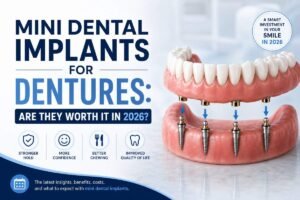
Loose lower dentures shift, rub, and cause soreness during eating and speaking. Denture adhesives provide partial, temporary relief. Mini implants placed in the lower jaw — typically four of them — create fixed anchor points that the denture snaps securely onto. The result is a denture that stays in place through meals, conversations, and social moments without any adhesive.
Upper denture stabilisation is also possible, though the anatomical conditions are more variable and require individual assessment. The difference in daily comfort and confidence for patients who have been managing unstable dentures for years is, in the experience of implant clinicians, among the most transformative outcomes in restorative dentistry.
For a detailed clinical review of how mini implants support dentures, how many are typically needed, and what the procedure involves, read our full guide to [mini dental implants for dentures].
Are They Worth It for Seniors?
Yes, for many older patients, mini dental implants represent the most appropriate restorative option available — not simply an affordable alternative, but clinically the better fit.
Age itself is not a contraindication for mini dental implants. The relevant factors are bone quality, general health, and the specific restoration needed. Because mini implants require less bone volume, involve a less invasive procedure, and have a shorter recovery period, they are often better suited to the physiology and preferences of older adults than full-size implant surgery.
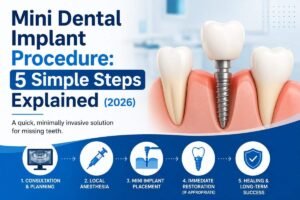
Many patients in their 70s and 80s have successfully received mini implants for denture stabilisation and reported meaningful improvements in eating comfort, speech clarity, and self-confidence. The minimally invasive nature of the procedure — typically completed under local anaesthesia without stitches — makes it a realistic option for patients who would not be comfortable with extensive oral surgery.

What About Long-Term Value?
Patients evaluating mini dental implants long-term value often focus on function, maintenance requirements, and overall quality-of-life improvement rather than implant survival statistics alone.
In suitable candidates, are mini dental implants a good investment becomes less a question of initial cost and more a question of long-term clinical suitability.
For many international patients comparing treatment options abroad, mini dental implants Turkey worth it is a common search query because Türkiye combines internationally recognised implant systems with significantly lower treatment costs.
Short-term success rates for mini dental implants — particularly for denture stabilisation — are consistently high, often above 90% in the first two to three years. Long-term data beyond five to ten years is less extensive than for traditional implants, and outcomes are more variable in patients with heavy bite forces or suboptimal oral hygiene. For a detailed review of the clinical evidence, peer-reviewed survival rates, and what the data actually shows, see our guide to [mini dental implant success rates] and [how long mini dental implants last].
The key insight is this: long-term value is not determined by implant type alone. It is determined by the match between the implant type and the patient’s anatomy, bite forces, and maintenance habits. A well-selected mini implant maintained properly can deliver years of reliable function. A poorly selected one — regardless of type — will not
Is Getting Treatment in Türkiye Worth It?
For international patients researching mini dental implants, Türkiye — and specifically Istanbul — has become one of the most clinically credible and cost-effective destinations in the world for this procedure.
The cost of mini dental implants at a qualified Istanbul clinic is significantly lower than equivalent treatment in the UK, Germany, the Netherlands, or North America — not because of lower clinical standards, but because of lower operating costs, favourable exchange rates, and the scale of Türkiye‘s health tourism infrastructure. Premium implant systems from manufacturers such as Straumann and Nobel Biocare are available at Kristal Clinic at prices that reflect genuine savings rather than compromise.
At Kristal Clinic, international patients receive a remote clinical assessment before travelling — allowing the clinical team to evaluate bone volume from a panoramic X-ray or CBCT scan, confirm suitability, and provide a written treatment plan with transparent pricing before any commitment is made.
Treatment for many mini implant cases can typically be completed within a single visit to Istanbul, and in selected cases an immediate load implant approach may be possible.
Ready to find out whether mini dental implants are worth it for your specific case? [Book a free remote assessment with the Kristal Clinic clinical team →] or send your panoramic X-ray via WhatsApp for a no-obligation evaluation.
Frequently Asked Questions
Are mini implants worth it?
In the right clinical situation, yes. Are mini implants worth it depends on bone availability, treatment goals, bite forces, and the type of restoration being supported. For many patients seeking a minimally invasive dental implant solution, mini implants provide meaningful functional and quality-of-life benefits.
Are mini dental implants worth it for a single tooth?
Potentially yes — particularly for smaller teeth in narrow-ridge areas. For larger teeth, especially posterior molars, a full-diameter implant is usually more appropriate. The suitability depends on the tooth being replaced, the available bone, and the expected bite forces in that area.
Are mini dental implants worth the money?
For patients who match the appropriate clinical profile, yes. The upfront cost is lower than traditional implants, the procedure is faster, and for denture wearers in particular, the quality-of-life improvement is significant. The important caveat is that placing mini implants in the wrong case can lead to failure — meaning the true cost-effectiveness depends entirely on accurate patient selection.
Is getting mini dental implants in Türkiye worth it?
For international patients who have had a proper remote assessment confirming suitability, Türkiye offers genuine clinical quality at significantly lower cost than most Western markets. The key is choosing a clinic that uses premium implant brands, provides a written treatment plan before your visit, and offers clinical accountability through structured aftercare. Kristal Clinic operates to these standards for all international patients.