
🩺 Clinical & Editorial Trust Dashboard
Medically Reviewed — May 2026 | Dr. Anas Zemzemi, DDS — Oral Implantology & Reconstructive Dentistry | Kristal Clinic Istanbul
Published /Fact-Checked: May 20, 2026
Read time : 4–6 min
Mini dental implants are narrow-diameter titanium implant posts designed to support selected tooth replacement and stabilization treatments. Compared with conventional implant systems, they use a smaller implant body while still providing structural support for specific restorative cases where standard-diameter implants may not be appropriate or feasible.
This guide explains:
- what are mini dental implants
- how they function
- the different implant systems available
- where they are commonly used
- and what patients should expect during treatment planning.
Patients researching broader implant categories may also explore our complete guide to dental implant types for a full overview of modern implant systems.
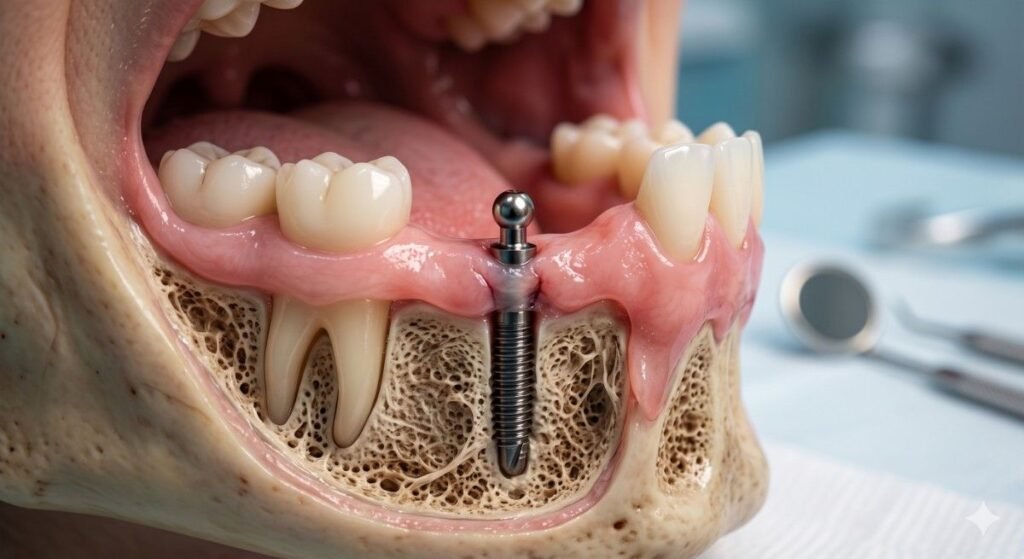
Table of Contents
ToggleQuick Answer: What Is a Mini Dental Implant?
Mini dental implants are thin titanium implant posts, usually between 1.8–3.3 mm in diameter, used in selected dental restoration cases where a smaller implant structure may be appropriate. Also known as small diameter implants or narrow diameter implants, they are commonly designed as one-piece implants and may be used for single-tooth replacement, lower arch stabilization, or narrow-space restorations depending on bone structure and treatment goals.
Patients planning treatment abroad can also read our full guide to mini dental implants in Türkiye: cost, procedure, and 2026 treatment planning for a country-specific breakdown of prices, clinical steps, and what to expect before traveling.
Patients comparing structural differences between implant systems may also explore:
What Are Mini Dental Implants?
In professional implantology, mini dental implants are a distinct implant category defined by their reduced cross-sectional diameter relative to conventional root-form fixtures. In clinical research and ADA-recognized literature, they carry three overlapping formal classifications:
- Small diameter implants (SDIs): The official nomenclature recognized by the American Dental Association and used in peer-reviewed implantology research.
- Narrow diameter implants (NDIs): Used interchangeably by prosthodontists when treating compromised ridges with limited bone volume.
- Micro dental implants: A colloquial designation used by certain manufacturers to describe ultra-narrow fixtures at the 1.8–2.1 mm end of the diameter spectrum.
What are mini dental implants made of? Mini dental implants are manufactured from commercially pure Grade 4 titanium or titanium alloy (Ti-6Al-4V) — the same biocompatible materials used across all major implant systems. These metals promote bone integration, resist corrosion, and are safe for long-term intraoral use. Unlike conventional two-piece setups with separate abutment components, most mini systems use a solid, integrated structure.
For a full breakdown of standard root-form implant architecture, see our guide to [implant abutment anatomy].

Structural Architecture: One-Piece Implant Design
Unlike traditional two-piece implant systems that connect a subsurface fixture to a separate prosthetic platform via a retaining screw (covered in our [multi-unit abutment systems guide]), the vast majority of mini implant systems use a solid one-piece design.
In this configuration, the threaded fixture (the section anchoring in bone) and the prosthetic attachment head are manufactured as a single, uninterrupted piece of titanium. This eliminates the micro-gap between implant and abutment — reducing the risk of mechanical screw loosening over time — but requires precise angle planning during surgical insertion, since the attachment angle cannot be corrected after placement.
Mini Dental Implant Diameter — Standard Sizes
The exact diameter of a mini dental implant determines its load-bearing capacity and the anatomical situations in which it can be reliably used. Smaller diameters preserve more lateral bone but alter how the system handles long-term chewing forces.
| Diameter | Classification | Primary Clinical Application |
|---|---|---|
| 1.8 mm | Ultra-narrow | Highly limited bone width; lower anterior stabilization |
| 2.1 mm | Narrow | Standard MDI — most common diameter worldwide |
| 2.4 mm | Narrow-standard | Transitional threshold between mini and conventional |
| 3.0–3.3 mm | Small standard | Narrow-ridge cases where full-diameter implants are unsuitable |
Candidacy evaluation — including bone width measurement, density classification, and systemic health screening — is covered in depth on our mini dental implant candidacy criteria page. For a reference on endosteal implant sizing in conventional systems.
How Do Mini Dental Implants Work?
Mini dental implants achieve functional stability through a dual-phase mechanical and biological process that mirrors conventional implant science, adapted for a narrower profile.
Phase 1 — Initial Stability via Cortical Bone Engagement
Conventional implants create a wider osteotomy that engages both the dense outer cortical bone layer and the softer inner cancellous bone beneath it.
Because MDI implants are self-tapping and exceptionally narrow, they achieve primary stability at the moment of insertion by maximizing contact with the cortical bone — the dense, compact outer shell of the jaw. This tight engagement creates a mechanical wedge effect that delivers high initial insertion torque. That primary stability is critical: it holds the implant securely in position before biological healing begins, preventing micro-movement that would disrupt osseointegration.
Phase 2 — Secondary Stability via Osseointegration
Over the weeks following placement, surrounding living bone undergoes a cellular adaptation process. Osteoblasts (bone-forming cells) migrate to the titanium surface and deposit new bone matrix directly against the implant, creating a direct structural and functional bond — osseointegration.
Most modern mini implant manufacturers treat their fixture surfaces with sandblasting, acid-etching, or hydroxyapatite coating to maximize the surface area available for bone contact and accelerate biological bonding.
The distinction between these two phases — cortical mechanical engagement first, biological osseointegration second — is what makes proper diameter selection and insertion torque control so clinically important. For a materials-level comparison of how titanium and zirconia surfaces interact differently with bone, see our [titanium vs zirconia implants guide].
Many modern implant systems are engineered to maximize:
- insertion torque
- implant fixation
- bone contact surface
- and long-term structural retention.
Patients researching broader implant architecture may also explore the structure of endosteal implant systems, which remain the most widely used implant category worldwide.
Types of Mini Dental Implants
Several implant systems and structural design variations exist within this category. Understanding these differences helps patients ask informed questions during consultation.
3M ESPE MDI System
The 3M ESPE MDI system — MDI standing for Mini Dental Implant — is historically the most recognized and widely documented small-diameter implant system in clinical literature. Originally developed by Dr. Victor Sendax, this system established the long-term clinical protocols for narrow-ridge stabilization that most modern MDI systems now follow.
Key design characteristics:
- Solid one-piece design: The implant body and prosthetic attachment are a single titanium component.
- Integrated ball attachment head: A rounded ball structure protrudes through the gum tissue.
- O-ring retentive mechanism: A rubber or silicone O-ring housed inside a metal cap snaps directly over the ball head, absorbing shock and creating retention for a removable appliance.
- Regulatory status: Holds FDA clearance for long-term clinical use in the United States.
Other Mini Implant Systems
Other manufacturers also produce mini dental implants, including:
- Osstem mini implant
- Imtec MDI
- additional narrow-diameter implant systems.
These systems may differ in:
- implant thread design
- prosthetic connection
- surface treatment
- restorative flexibility
- and diameter availability.
Patients researching implant manufacturers and long-term clinical performance may also explore our guide to top dental implant companies in the world.
Osstem Mini Implant System
Osstem, one of the largest dental implant manufacturers globally, produces narrow-diameter and mini implant systems used across European, Asian, and international markets. Osstem mini implant fixtures feature advanced surface-treated designs optimized for accelerated bone bonding and are available in multiple diameter options with varying prosthetic connection types.
Imtec MDI
The Imtec MDI represents a foundational milestone in narrow-diameter implant development. It generated much of the early longitudinal clinical data on mini implant survival rates and long-term stability before the underlying technology was acquired and refined by larger manufacturers.
One-Piece vs Two-Piece Mini Implant Designs
The structural design choice between one-piece and two-piece configurations affects prosthetic flexibility and surgical planning requirements.
One-piece mini implants (industry standard for most MDI systems):
- Implant body and prosthetic attachment are a single integrated unit
- Streamlined placement with no secondary abutment required
- Less prosthetic flexibility — the attachment angle is fixed at manufacture
- Lower mechanical complexity reduces the risk of component loosening
Two-piece narrow-platform systems (less common at classic mini diameters; more available in the 2.9–3.3 mm range):
- Separate implant fixture and customizable abutment, similar in philosophy to conventional implant design
- Greater prosthetic flexibility — angulated abutments can correct non-ideal implant trajectories
- Available from Straumann Roxolid and Nobel Biocare narrow platform lines
- Better suited to complex restorative cases requiring crown-level angulation correction
For broader brand evaluation across full-diameter conventional systems, see our [leading implant manufacturer comparison].
Micro Dental Implants vs Mini Dental Implants
The terms are used interchangeably in most patient-facing and clinical contexts. Both describe narrow-diameter titanium fixtures below the conventional 3.5 mm threshold. Some manufacturers use “micro” specifically to describe hardware at the ultra-narrow end of the spectrum (1.8–2.1 mm), while others apply both terms to the same products. The actual implant diameter and system specifications are more clinically meaningful than the commercial label attached to any particular product.
What Are Mini Dental Implants Used For?
The clinical protocol for mini implant placement follows a systematic sequence designed to maximize accuracy, minimize surgical trauma, and protect surrounding anatomy. For a detailed, sequential walkthrough of the clinical treatment timeline, read our complete guide on the mini dental implant procedure.
Mini Dental Implants for Single Tooth Replacement
A prosthodontist may recommend narrow-diameter fixtures for single tooth restoration under specific anatomical conditions:
- Narrow mesiodistal spacing: Gaps between adjacent teeth too narrow to accommodate a standard 3.5 mm implant without risking root damage to neighboring teeth.
- Limited ridge width: Areas of localized bone resorption where a wider fixture cannot be safely placed.
- Small anterior positions: Lower incisors and upper lateral incisors naturally experience lower bite forces than posterior teeth, making these positions more compatible with narrow-diameter fixtures.
Patients comparing implant-supported restorations with bridge-supported alternatives may also want to explore our guide to implants vs dental bridges.
Mini Dental Implants for Molars
Molar positions routinely absorb 2–5 times more chewing force than anterior teeth due to their role in primary mastication. Because a narrower implant presents a reduced cross-sectional surface area, placing a single mini implant in a high-force molar zone carries an elevated risk of mechanical fatigue, fixture failure, or crestal bone loss over time. Where posterior bone width is sufficient, standard full-diameter implants remain the established clinical preference.
For a full clinical analysis of complications and structural limitations associated with posterior narrow-implant placement, see our guide on [mini implant limitations].
Mini Dental Implants for the Lower Arch
The anterior mandible — the front section of the lower jaw — is one of the most clinically established applications for narrow-diameter implants. This region frequently maintains excellent bone height but develops narrow ridge width due to progressive resorption following tooth loss.
Key anatomical considerations in lower arch planning:
- Ridge width: Atrophied lower ridges with inadequate width for conventional implants are the primary indication for mini diameter fixtures.
- Mental foramen proximity: The mental foramen nerve exit limits available implant length and positioning in some lower arch locations, making CBCT-guided planning essential.
- Arch stabilization: Mini implants in the lower anterior region frequently serve as retention anchors for removable prostheses, maintaining a minimally invasive surgical footprint.
Patients specifically researching denture stabilization systems can review our 2026 clinical guide to mini implant-supported dentures for an in-depth breakdown of retention mechanisms and long-term outcomes.
Mini Dental Implant Placement — What to Expect
The clinical protocol for mini implant placement follows a systematic sequence designed to maximize accuracy, minimize surgical trauma, and protect surrounding anatomy.
Step 1 — Pre-Surgical Diagnostic Phase
Your clinical provider will conduct a comprehensive examination alongside detailed digital imaging. This typically involves:
- Periapical radiographs for localized bone assessment in targeted implant sites
- CBCT (Cone Beam Computed Tomography) scan for full three-dimensional evaluation of bone width, bone density, and proximity to critical anatomical structures including nerves and the maxillary sinus
If the underlying bone is severely resorbed, your provider will evaluate whether surgical bone augmentation is necessary before implant placement can proceed. See our guide on [bone grafting before implants] for a full overview of grafting timelines and techniques. For patients exploring non-surgical bone preservation strategies, see our [jaw bone preservation approaches guide].
Step 2 — Anesthesia and Site Preparation
The entire procedure is performed in an outpatient clinic setting under standard local anesthesia. Because mini implant hardware is narrow, many clinical protocols use a flapless technique — placing the implant directly through the gum tissue without making large incisions or reflecting a full mucoperiosteal flap. This minimally invasive approach significantly reduces post-operative swelling, discomfort, and healing time compared with conventional implant surgery.
Step 3 — Precise Implant Insertion
Using a specialized low-speed handpiece, the clinician prepares a small pilot hole in the bone and inserts the one-piece mini implant using torque-controlled instruments. The fixture is advanced until it reaches the manufacturer’s specified insertion torque threshold — the point that confirms adequate cortical bone engagement and primary stability. Sutures are rarely required in standard mini implant protocols.
Step 4 — Procedure Duration and Recovery
- Single implant placement: Typically 30–60 minutes
- Multiple implant placements: Usually completed within 1–2 hours
Most patients report mild soreness for 24–72 hours, manageable with standard over-the-counter analgesics. A soft-food diet is recommended for the initial days of the healing phase. Follow-up appointments confirm osseointegration progress and allow prosthetic adjustment.
Where severe ridge narrowing exists, clinicians may evaluate whether bone grafting procedures are necessary before implant placement.
Aftercare and Long-Term Maintenance
Proper maintenance after mini implant placement directly influences long-term success rates. For a complete look at clinical data regarding structural survival and expectations over time, see our breakdown on how long do mini implants last and what the evidence shows.
Daily home care:
- Soft-bristle toothbrush or interproximal brush around each implant emergence site
- Low-abrasive toothpaste — avoid whitening formulas with high-RDA abrasives near implant surfaces
- Water flosser or antibacterial rinse to remove biofilm around ball attachments or prosthetic caps
Professional maintenance schedule:
- 4-week post-placement check: Verify soft tissue health and primary prosthetic fit
- 3-month review: Assess osseointegration progress, verify torque stability, inspect O-ring condition in overdenture cases
- Annual clinical review: Radiographic assessment of crestal bone level and implant integration continuity
This is a simple chairside procedure and does not affect the implant fixture itself. To weigh these ongoing maintenance factors against the upfront financial savings, see our complete breakdown on whether mini dental implants for dentures are worth it in 2026 over a lifetime.
Recognizing Early Warning Signs
Most mini implant complications develop gradually and can be intercepted before they become irreversible. Patients should contact their clinical provider promptly if any of the following occur:
- Persistent mobility of the implant post beyond the first 7 days after placement — some initial micro-flex is normal during healing, but detectable movement at 2 or more weeks indicates compromised primary stability
- Chronic peri-implant soreness or swelling not resolved by 2 weeks — may indicate early peri-implantitis (bacterial infection of surrounding bone tissue)
- Gradual loosening of the prosthetic retainer or overdenture — can signal O-ring wear or, less commonly, fixture movement
- Radiographic bone loss at the implant neck — detectable only at professional review; a key reason annual periapical imaging is recommended even for asymptomatic patients
For a detailed clinical analysis of failure rates, mechanical risk factors, and patient-level variables affecting long-term outcomes, see our comprehensive guide on [mini implant limitations].
Clinical Suitability at a Glance
| Clinical Situation | Mini Implants Highly Considered | Additional Evaluation Required |
|---|---|---|
| Localized narrow jawbone ridge width | ✅ | |
| Removable lower arch overdenture stabilization | ✅ | |
| Narrow mesiodistal spacing between teeth | ✅ | |
| Single tooth replacement — low-force anterior zone | ✅ | |
| High-force molar chewing zones | ⚠️ | |
| Heavy nighttime teeth grinding (bruxism) | ⚠️ | |
| Severe bone resorption without prior grafting | ⚠️ | |
| Full-arch fixed restoration (non-removable bridge) | ⚠️ See All-on-4 / 3-on-6 guides | |
| Adjacent root proximity concerns | ⚠️ |
Final treatment selection always depends on individualized clinical examination, CBCT imaging, and prosthetic planning.
Can Mini Dental Implants Help You Avoid Bone Grafting?
One of the main advantages of mini dental implants is that their smaller diameter may allow placement in areas with reduced jawbone volume where standard implants would often require additional bone augmentation. As a result, some patients can avoid grafting procedures and benefit from a less invasive treatment approach with a shorter overall timeline.
However, mini implants are not a universal substitute for bone grafting. Patients with severe bone loss, advanced ridge resorption, or complex full-arch rehabilitation cases may still require augmentation procedures to create adequate support for long-term implant success.
If you are comparing both treatment options, our article Mini Dental Implants vs Bone Grafting: Which Option Is Better in 2026? explains when grafting may be necessary, when mini implants may offer an alternative, and how the two approaches differ in terms of recovery, cost, treatment duration, and clinical outcomes.
Frequently Asked Questions
What are mini dental implants?
Mini dental implants are narrow-diameter titanium implant posts — typically 1.8–3.3 mm wide — used in selected tooth replacement and stabilization procedures where reduced-width implants are clinically appropriate. They are formally classified as small diameter implants (SDIs) or narrow diameter implants (NDIs) in ADA and peer-reviewed clinical literature.
How do mini dental implants work?
Mini dental implants work by engaging the jawbone through a narrow titanium fixture that achieves initial stability through cortical bone contact, then undergoes biological integration (osseointegration) over the weeks following placement. The implant post anchors a prosthetic restoration — a crown, cap, or retention attachment — above the gumline.
What are mini dental implants used for?
Mini dental implants may be used for single tooth replacement in narrow spacing, lower arch denture stabilization, narrow-ridge restorations, and selected partial prosthetic cases — always depending on bone anatomy, bite force, and prosthetic requirements. They are not appropriate for every clinical situation.
What are the different types of mini dental implants?
The main systems include the 3M ESPE MDI system, Osstem mini implants, Imtec MDI, Straumann narrow implants, and Nobel Biocare narrow platform systems. Structurally they are divided into one-piece designs (most common) and two-piece narrow-diameter designs. Diameter options range from 1.8 mm to 3.3 mm.
Can mini dental implants replace a single tooth?
Yes, in selected cases. Narrow-diameter fixtures for single tooth replacement are considered when bone width is limited and the tooth position involves lower bite forces. Treatment planning must evaluate occlusal load, implant diameter, crown design, and long-term functional demands before this approach is confirmed.
Free Remote Clinical Evaluation — Kristal Clinic, Istanbul
Kristal Clinic’s prosthodontic team has assessed thousands of implant cases across patients from the UK, Europe, and international markets. If you are considering mini dental implant treatment and want to understand whether your anatomy is suitable before traveling, we offer a complimentary remote evaluation — no obligation, no travel required.
How it works:
- Share your panoramic X-ray or CBCT scan securely with our clinical team
- Receive a written clinical assessment from Dr. Yusuf Sabir within 48 hours
- Decide whether to proceed with a full in-clinic consultation in Istanbul
Average response time: 48 hours · Available in English and Turkish
Clinical References
- Bidra AS, Almas K. Mini implants for definitive prosthodontic treatment: a systematic review. J Prosthet Dent. 2013;109(3):156-164. doi:10.1016/S0022-3913(13)60035-0
- Shatkin TE, Shatkin S, Oppenheimer BD, Oppenheimer AJ. Mini dental implants for long-term fixed and removable prosthetics: a retrospective analysis of 2,514 implants placed over a five-year period. Compend Contin Educ Dent. 2007;28(2):92-99.
- Sohrabi K, Mushantat A, Esfandiari S, Feine J. How successful are small-diameter implants? A literature review. Clin Oral Implants Res. 2012;23(5):515-525. doi:10.1111/j.1600-0501.2011.02410.x
This article was clinically reviewed by Dr. Yusuf Sabir, Prosthodontist, Department of Prosthodontics, Kristal Clinic, Istanbul. Published May 2026. Content is intended for informational purposes and does not substitute for individualized clinical evaluation.