Analysis by: Kristal Clinic Medical Team
Medical Review: Dr. Alper Enver, DDS, MFDS RCS (UK) | 4,000+ Implant Cases
Last Updated: Feb 2026 | ⏱ Read Time: 3 min
Table of Contents
ToggleWorried About Recovery?
Most patients fear pain, implant failure, or being “stuck” with temporary teeth for months.
The truth:
You walk out with fixed teeth the same day
Discomfort peaks early, not late
The real risk is not respecting the healing timeline
This guide explains recovery within the broader context of dental implants, helping patients understand how healing fits into the complete implant journey. It also complements explanations found in what types of dental implants are available and how dental implants all-on-four get your smile back fast through immediate-load full-arch solutions.
🧭 Not sure what recovery would look like for you?
A 3D CBCT scan maps your unique anatomy to forecast healing speed and optimize surgical planning before day one.
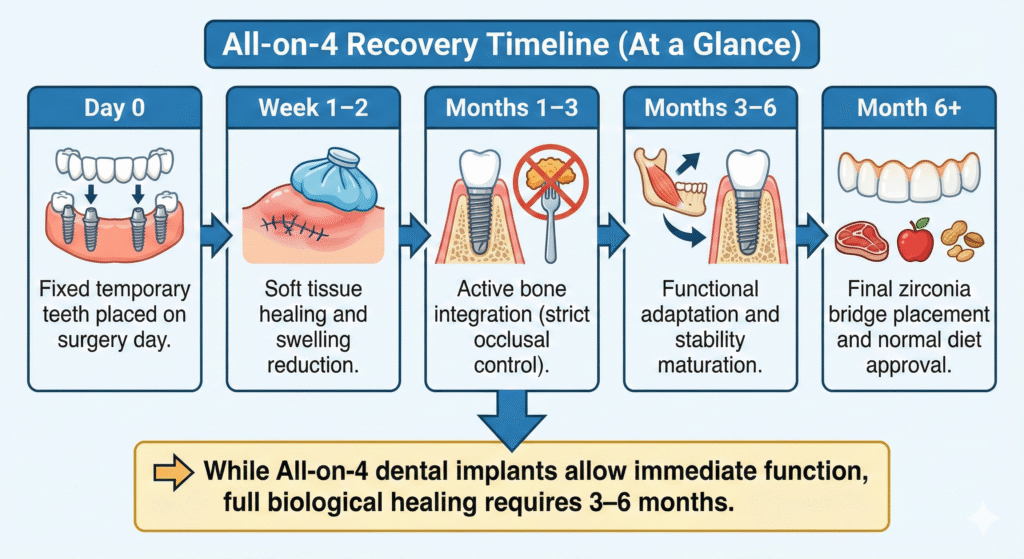
All-on-4 Recovery Timeline (At a Glance)
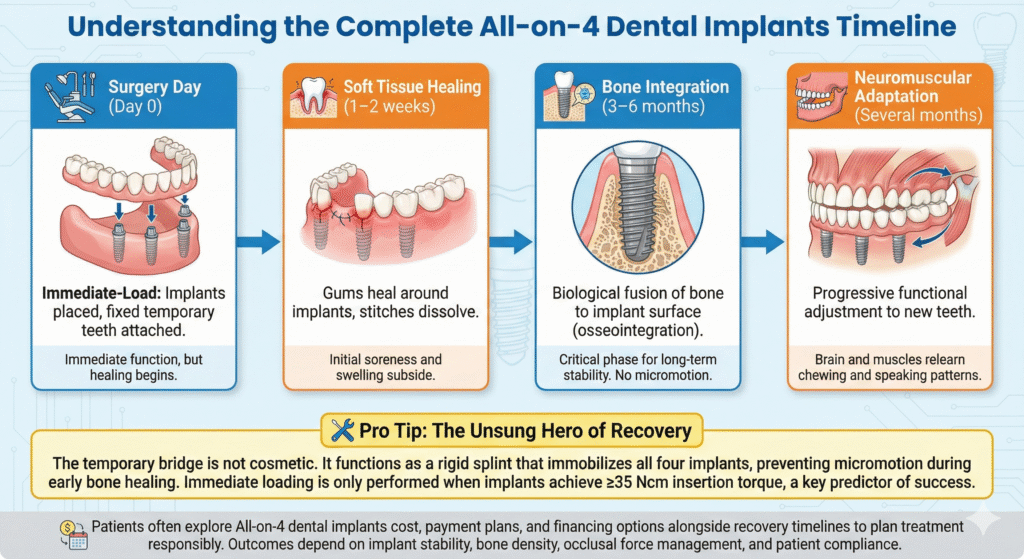
Day 0: Fixed temporary teeth placed on surgery day
Week 1–2: Soft tissue healing and swelling reduction
Months 1–3: Active bone integration (strict occlusal control)
Months 3–6: Functional adaptation and stability maturation
Month 6+: Final zirconia bridge placement and normal diet approval
➡️ While All-on-4 dental implants allow immediate function, full biological healing requires 3–6 months.
Key Takeaways
Immediate Function, Gradual Healing
All-on-4 dental implants temporary teeth are placed on day one, but osseointegration and neuromuscular adaptation take months.
Recovery Has Three Pillars
Successful All-on-4 recovery depends on soft tissue healing, bone integration, and functional adaptation.
Occlusal Control Is Critical
Managing bite force during the first three months is more predictive of implant success than surgical speed.
Diet Progression Is Phased
A normal diet is only approved after the final prosthesis, typically after six months.
💡 Considering All-on-4 dental implants?
Understanding recovery is just as important as understanding the procedure itself. A personalized CBCT scan helps predict your exact dental implant healing timeline before treatment begins.
Medical Review & Clinical Authority
Medically reviewed by Dr. Ali Saygi
Doctorate — Department of Oral, Dental & Maxillofacial Surgery
Bezmialem Vakıf University
Last Medical Review: March 12, 2026
Next Scheduled Review: March 2027
Clinical protocols reflect those used at Kristal Clinic, where recovery predictability is established before surgery.
What Most Patients Ask Next
Is pain normal after All-on-4 surgery?
Can dental implants fail during recovery?
How long does it take to eat normally again?
What mistakes delay dental implant healing?
Each question is addressed below using clinical timelines and biological principles.
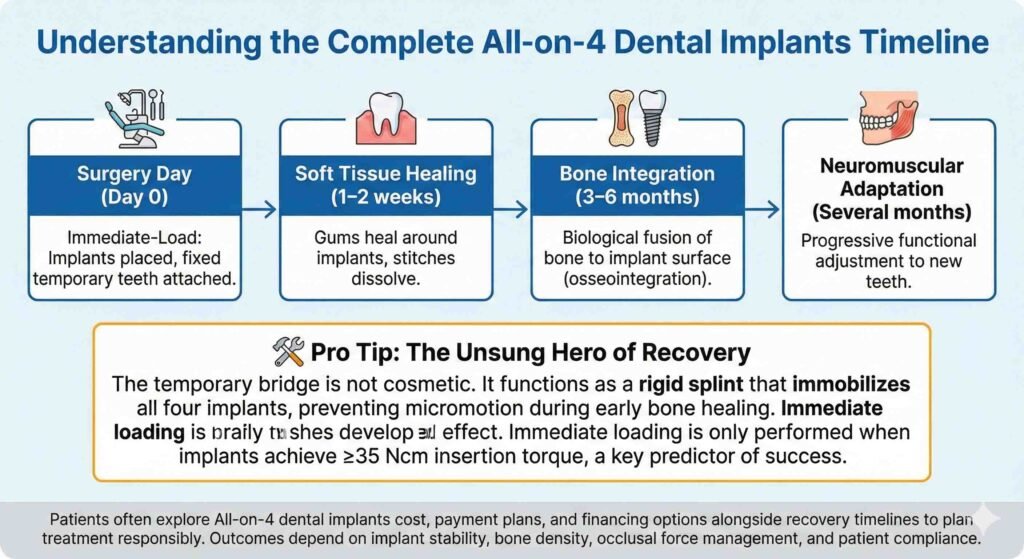
Understanding the Complete All-on-4 Dental Implants Timeline
All-on-4 dental implants recovery is the biological and functional healing period following immediate-load full-mouth dental implants surgery. For a technical breakdown of surgical execution, see the All-on-4 dental implants procedure step-by-step guide.
Although patients receive fixed temporary teeth on the day of surgery, recovery unfolds in stages that define the complete All-on-4 dental implants recovery timeline from surgery to final restoration.
🛠️ Pro Tip: The Unsung Hero of Recovery
The temporary bridge acts as a rigid splint, preventing micromotion at the bone–implant interface. Immediate loading is only performed when implants achieve ≥35 Ncm insertion torque, a key predictor of long-term success.
Patients often explore All-on-4 dental implants cost and available payment plans and financing options alongside recovery planning.
Pre-Surgical Factors That Influence Recovery
CBCT imaging and bone density assessment
Sinus proximity and augmentation risk
Occlusal force mapping
Medical screening (diabetes, smoking, periodontal history)
These factors also reduce the likelihood of complications outlined in the honest truth about All-on-4 dental implants problems and risks.
Step-by-Step Clinical Execution & Recovery Protocols
Recovery outcomes are tied directly to planning precision, surgical technique, and post-operative compliance.
Visual Guide: The All-on-4 Recovery Journey
This visual journey illustrates:
Implant splinting biomechanics
Healing progression from Day 0 to Month 6+
Balanced occlusion versus destructive overload
The Detailed Dental Implant Healing Stages
Stage 1: Surgery & Initial Healing (Day 0 – Week 2)
Fixed temporary teeth are placed the same day, including same-day All-on-4 protocols explained in the All-on-4 dental implants same-day cost and price guide.
Stage 2: Early Osseointegration (Months 1–3)
Bone actively remodels around implants. Strict soft-food diet is required.
Stage 3: Maturation & Adaptation (Months 3–6)
Stability increases, chewing confidence improves, and neuromuscular adaptation progresses.
Stage 4: Final Restoration (Month 6+)
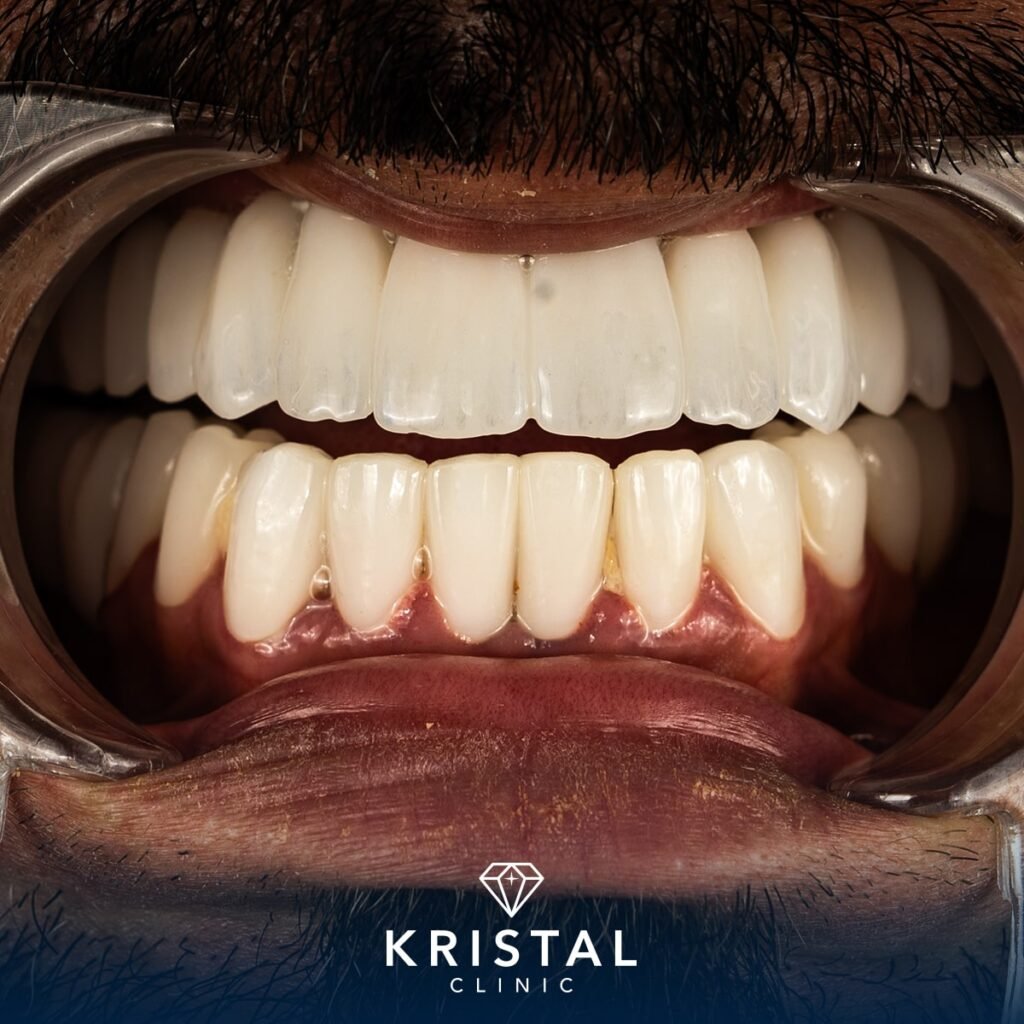
Once this milestone is reached, clinical studies confirm that long-term implant success rates exceed 95%, transforming your recovery into a lifetime solution.
Managing Diet: Eating & Daily Function During Recovery
How long after all-on-4 dental implants can I eat normally?
Soft foods: Day 1
Semi-soft chewing: 6–8 weeks
Normal diet: After final prosthesis (~6 months)
Patients often compare dietary progression with outcomes seen in before and after All-on-4 dental implants galleries.

The Adaptation Phase: Getting Used to New Teeth
How long does it take to get used to all-on-4 dental implants?
Functional adaptation is a significant part of the recovery from dental implants experience.
Speech normalization: 1–3 weeks
Chewing confidence: 6–12 weeks
Full neuromuscular adaptation: 3–6 months
This adaptation phase explains many “all on 4 recovery reddit” concerns and is normal, not failure.
Real Patient Perspectives from Online Communities
Scouring forums like Reddit reveals common, valid concerns addressed in dental implant healing process reddit discussions. Patients frequently express frustration with the lengthy soft-food diet and anxiety about temporary teeth. These shared experiences highlight why the 3-6 month integration period requires patience.
These common concerns are exactly why we schedule dedicated adjustment appointments within the first two weeks. It’s your time to address speech or comfort issues—no concern is too small when adapting to your new smile.
Understanding Potential Complications & Healing
| Factor | Recovery Impact |
|---|---|
| D4 bone density | Higher failure risk |
| Smoking | Delayed healing |
| Sinus lift | Extended recovery |
| Bruxism | Prosthetic stress |
| Poor hygiene | Inflammatory complications |
Patients comparing international options often review recovery standards when assessing the best country for All-on-4 dental implants.
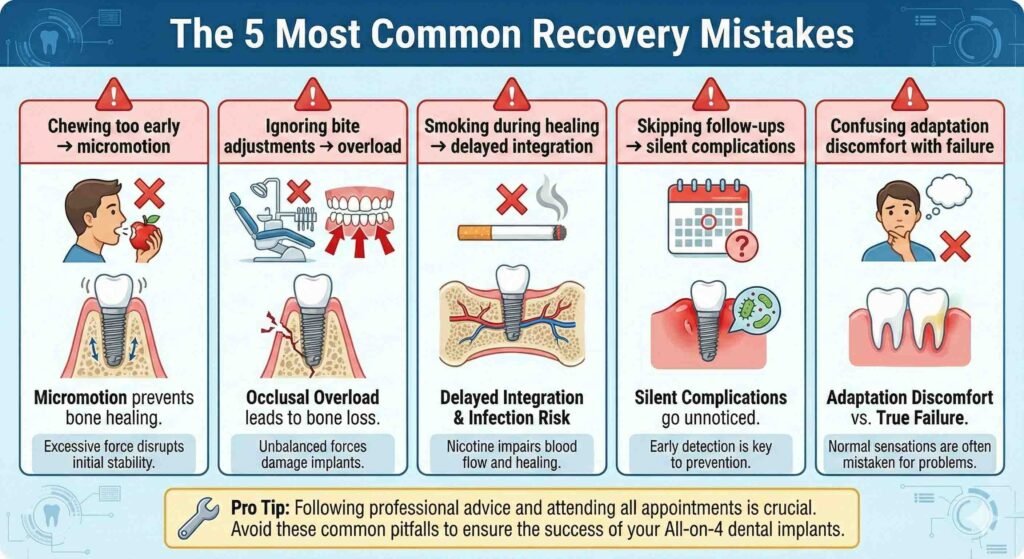
The 5 Most Common Recovery Mistakes
Chewing too early → implant micromotion
Ignoring bite adjustments → overload failure
Smoking during healing → delayed integration
Skipping follow-ups → silent complications
Confusing adaptation discomfort with failure
Advanced Surgical Recovery Considerations
Recovery from Sinus Lift Procedures
For patients requiring advanced bone grafting, understanding sinus augmentation recovery is crucial.
Recovery from sinus lift adds 2–4 additional weeks of caution.
Sinus augmentation recovery requires strict pressure avoidance; sneezing and nose-blowing restrictions apply.
Sinus-related recovery is anatomical, not implant-related—a nuance in the broader dental implant healing timeline.
How long does it take to heal from all on four dental implants?
All-on-4 dental implants recovery happens in stages. Initial gum healing takes about 1–2 weeks, while bone integration continues over 3–6 months. Most patients receive fixed temporary teeth the same day, allowing normal daily activities quickly. Full biological healing is complete once the final prosthesis is placed.
What is the healing timeline for All-on-4?
The All-on-4 dental implants recovery time begins with short-term swelling and discomfort in the first week. Soft tissues stabilize within a few weeks, while implants integrate with the jawbone over several months. The final permanent teeth are usually fitted after 4–6 months, once healing is confirmed.
How can I speed up dental implant healing?
To optimize dental implants healing time, follow post-surgical instructions carefully, maintain excellent oral hygiene, and avoid smoking. Eating soft foods, managing bite pressure, and attending follow-up visits help reduce complications. Healing cannot be rushed, but healthy habits significantly improve outcomes.
How long does it take to get used to All-on-4 dental implants?
Recovery from dental implants includes an adaptation phase where speech, chewing, and bite awareness adjust. Most patients feel comfortable within 2–4 weeks, though full neuromuscular adaptation can take a few months. Temporary teeth help ease this transition until the final prosthesis is placed.
Your Personalized Recovery Roadmap Starts Here
Your recovery roadmap begins with a precise plan. This guide outlines the universal journey, but lasting success depends on a plan built for you. Schedule a 3D CBCT consultation to map your predictable path from surgery to a fully healed, confident smile.
Understanding the timeline is one thing—knowing your ideal path is another. The entire recovery process hinges on the quality of your bone foundation from day one, which is why understanding the comprehensive All-on-4 dental implants cost is important for planning. This advanced procedure represents one of several types of dental implants available, each with specific applications.
Ready to map your own recovery? Schedule a 3D CBCT scan and consultation to see if your bone density and anatomy are ideal for the All-on-4 dental implants protocol, which can help you get your smile back fast.