
medically reviewed by Dr. Yusuf SABIR
updated for 2026 protocols
A zirconia dental bridge is a fixed ceramic dental restoration used to replace missing teeth with a strong, metal-free material. When patients are evaluating implants vs bridging of teeth to determine the most viable long-term solution, zirconia bridges stand out as a highly durable option that can be supported by natural abutments or surgical dental implants, depending on the clinical case. To evaluate structural eligibility and review specific procedural requirements, patients can get a free quote consultation via our medical coordination channel.
Key facts:
- A zirconia dental bridge is made from zirconia, a high-strength ceramic material.
- Patients may also search for zirconium dental bridge, but the clinical material is usually zirconia.
- It can replace one missing tooth, several missing teeth, or a full arch when supported by implants.
- Monolithic zirconia is often used for strength in back teeth and full-arch restorations.
- Layered zirconia may be used when front-tooth aesthetics and translucency zirconia are priorities.
- Long-term success depends on bridge design, bite force, hygiene, supporting teeth or implants, and regular check-ups.
To evaluate structural eligibility and review specific procedural requirements, patients can get a free quote consultation via our medical coordination channel.
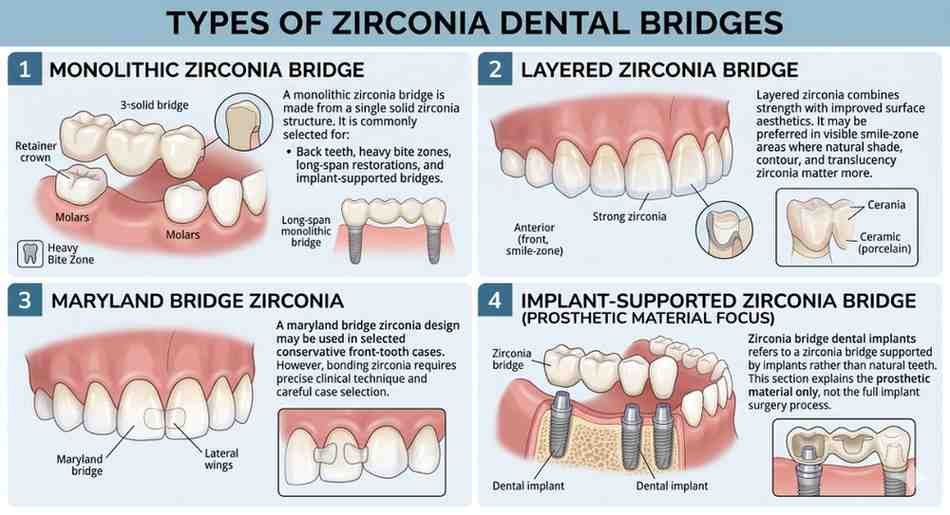
Table of Contents
ToggleWhat Is a Zirconia Dental Bridge?
A zirconia dental bridge is a fixed dental restoration made from zirconia ceramic. It replaces one or more missing teeth using artificial teeth connected to crowns or implant supports.
Keep this section short. Do not deeply explain pontic or abutment teeth, because the general bridge page already owns that anatomy intent.
Safe internal link:
For a basic explanation of bridge anatomy, see our guide on what a bridge for teeth is.
Zirconia vs Zirconium Dental Bridge: Are They the Same?
Many patients search for zirconium dental bridge, but the restoration is usually made from zirconia, a ceramic form of zirconium dioxide. In most patient searches, zirconia dental bridge and zirconium dental bridge refer to the same treatment category.

When Is a Zirconia Tooth Bridge Used?
A zirconia tooth bridge may be recommended when a patient needs a fixed, durable, aesthetic, and metal-free dental restoration, To determine clinical suitability and case-specific requirements, patients can get a free quote consultation via our medical coordination channel.
It may be used for:
- one missing tooth
- several missing teeth
- posterior bridges exposed to strong chewing force
- patients who prefer a biocompatible dental material
- selected full-arch implant-supported cases
- patients who want a strong ceramic alternative to porcelain-fused-to-metal bridges
Types of Zirconia Dental Bridges
Monolithic Zirconia Bridge
A monolithic zirconia bridge is made from a single solid zirconia structure. It is commonly selected for back teeth, heavy bite zones, long-span restorations, and implant-supported bridges.
Layered Zirconia Bridge
Layered zirconia combines strength with improved surface aesthetics. It may be preferred in visible smile-zone areas where natural shade, contour, and translucency zirconia matter more.
Maryland Bridge Zirconia
A maryland bridge zirconia design may be used in selected conservative front-tooth cases. However, bonding zirconia requires precise clinical technique and careful case selection.
Implant-Supported Zirconia Bridge Dental Implants
Zirconia bridge dental implants refer strictly to the zirconia prosthesis that is mounted onto surgical implants, rather than natural abutment teeth. For a complete breakdown of the surgical foundations that support these bridges, review the specific types of dental implants utilized in modern clinical planning. When evaluating the biocompatibility of the supporting posts themselves, our comparative guide on titanium vs zirconia dental implants outlines the clinical distinctions.

Zirconia Full Arch Bridge
A zirconia full arch bridge is a fixed prosthesis used to restore a complete upper or lower arch. It is usually supported by multiple dental implants and designed as a long-span fixed prosthetic device. For the comprehensive surgical methodology that makes this prosthesis possible, review our clinical breakdown of All-on-4 dental implants. Additionally,securing these rigid long-span bridges requires specialized connective hardware, detailed in our guide to multi-unit abutments (MUA).
This section should stay material-focused:
Cover:
- why zirconia is used in full-arch prosthetics
- strength under bite force
- monolithic vs layered design
- hygiene under the bridge
- occlusal planning
- maintenance risk
Avoid:
- full All-on-4 procedure steps
- implant placement protocol
- surgery timeline
- full-mouth implant cost
- bone grafting details
Safe internal link:
For the surgical concept behind full-arch implant treatment, see our clinical guide to All-on-4 dental implants.
Zirconia Dental Bridge vs Porcelain
| Factor | Zirconia Dental Bridge | Porcelain Bridge |
|---|---|---|
| Strength | Higher, especially monolithic zirconia | Good, but more prone to chipping |
| Aesthetics | Natural, especially layered zirconia | Very translucent and enamel-like |
| Back teeth | Strong option | Less ideal under heavy force |
| Front teeth | Good with proper layering | Excellent for high-aesthetic cases |
| Metal-free | Yes | Depends on material type |
| Best use | Strength, long-span bridges, full arch | High-translucency smile-zone cases |
Zirconia Bridge Lifespan
The zirconia bridge lifespan depends on the design, bridge length, bite force, hygiene, gum health, supporting teeth or implants, and regular dental maintenance.
A well-designed zirconia dental bridge can last many years, but failure can still happen because of biological problems around the support teeth or implants. The zirconia material may remain strong while the supporting structures develop decay, inflammation, mobility, or bone loss.
Can a Zirconia Dental Bridge Break?
Yes, a zirconia dental bridge can break, but fracture risk is lower when the restoration is properly designed and adjusted.
Common risk factors include:
- heavy grinding
- thin bridge connectors
- poor bite adjustment
- weak supporting teeth
- poor implant distribution
- long unsupported spans
- trauma
- poor laboratory design
- poor polishing or adjustment
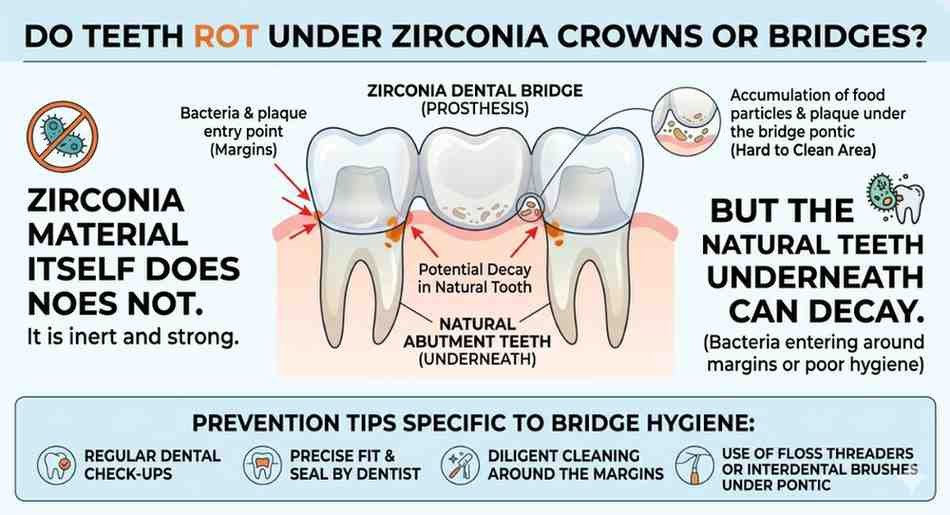
Do Teeth Rot Under Zirconia Crowns or Bridges?
The zirconia material itself does not rot. However, natural teeth under bridge crowns can decay if bacteria enter around the margins or if the patient cannot clean properly under the bridge.
This section is safe because it answers a zirconia-specific patient concern, but avoid turning it into a full general dental bridge hygiene guide.
What Are the Disadvantages of Zirconia Bridges?
Possible disadvantages include:
- higher material cost than some bridge materials
- reduced translucency in some monolithic zirconia designs
- difficult removal if replacement is needed
- technical difficulty when adjusting or polishing
- possible opposing tooth wear if the surface is rough
- fracture risk if design rules are ignored
- not always ideal for every front-tooth aesthetic case
Are Zirconia Bridges Worth It?
A zirconia dental bridge may be worth it when strength, long-term function, and aesthetics are priorities. While it is especially useful for back teeth and zirconia full arch bridge cases, understanding the required investment is the next step. If you are ready to compare your options, view our complete guide on zirconia bridge cost details in Türkiye.
FAQ
Is zirconia good for dental bridges?
Yes, a zirconia dental bridge is an exceptionally good choice for replacing missing teeth. Known for its superior strength and biocompatibility, a zirconium dental bridge provides a durable, metal-free dental restoration that looks highly natural. Because it does not contain metal, it eliminates the dark line often seen at the gumline with traditional restorations, making it ideal for both front and back teeth.
Can a zirconia bridge break?
While incredibly strong, a zirconia tooth bridge can theoretically break, though it is highly uncommon. Fractures usually only occur due to extreme teeth grinding (bruxism), a severe facial trauma, or an improper fit. However, restorations made from solid monolithic zirconia (crafted from a single block of material) are virtually unbreakable under normal chewing forces.
How long does it take to make zirconia bridges?
Getting a teeth zirconia bridge typically requires two dental visits over a span of 1 to 3 weeks.
Visit 1: The dentist prepares the abutment teeth, takes impressions, and places a temporary bridge.
Lab Time: A dental laboratory uses CAD/CAM technology to mill the custom bridge.
Visit 2: The final bridge is fitted and cemented. (Note: Some dental clinics equipped with in-house milling machines can manufacture and place the bridge in a single day).
How long will a zirconia bridge last?
The average zirconia bridge lifespan is 10 to 15 years, but with excellent oral hygiene and regular dental checkups, they frequently last 20 years to a lifetime. This impressive longevity applies to small bridges as well as a larger zirconia full arch bridge. For patients who lack healthy natural teeth to support the restoration, zirconia bridge dental implants can be used to anchor the bridge, providing a permanent, lifelong solution.